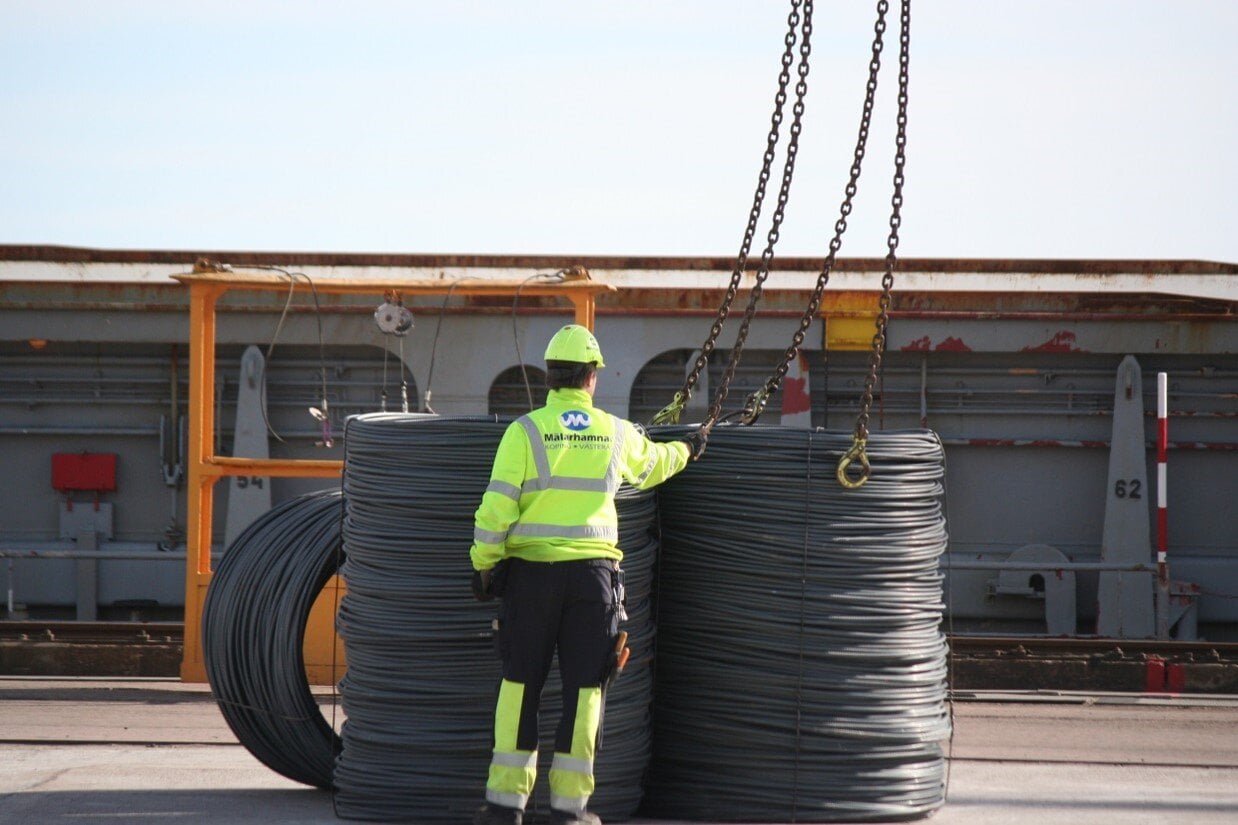

ISPS gjorde hamnskydd till en laglig skyldighet. För hamnskyddschefen (PFSO) är det en daglig.
Varje person på området — både anställda och underentreprenörer — måste verifieras, godkännas och kunna redovisas, enligt ISPS och ett allt bredare regelverk runt omkring.
Vi på Inphiz är på plats, dag två på Breakbulk, och vi tar med oss något mer värdefullt än bra möten: en bekräftelse. Det är glädjande att se att svenska hamnar redan tänker i den här riktningen — mot att göra regelefterlevnaden digital, spårbar och revisionsklar. Vi kom hit för att pröva en tanke: att det svåra med hamnens regelefterlevnad inte är godset eller systemen, utan människorna som rör sig genom anläggningen varje dag — anställda såväl som underentreprenörer. Samtal efter samtal hände samma sak. Folk nickade igenkännande. Berättelserna kom fram. Och nästan varje hamn vi pratade med ville veta samma sak: hur gör man det här i praktiken?
Det känns som att något har satts i rörelse. ISPS och regelefterlevnad — vanligtvis den del av verksamheten ingen vill prata om — visade sig vara precis det alla ville prata om. Den här artikeln är vårt försök att sätta ord på det vi hör.
En gemensam utmaning, inte en lokal
 Samtal efter samtal dök samma glapp upp.
Breakbulk bekräftar det vi redan börjat ana. De senaste månaderna har vi fört samtal med hamnförbund och myndigheter i Frankrike, Spanien, Italien och Portugal, och bilden är slående samstämmig. Samma glapp dyker upp överallt: att säkra och bevisa regelefterlevnaden för människorna som rör sig genom en anläggning — anställda och underentreprenörer — enligt ISPS och ett allt bredare regelverk.
 I samtal med franska hamnar — HAROPA, Ports de Lille, MedLink med flera.
Det är inte ett problem som någon enskild aktör, eller något enskilt land, löser på egen hand. Slutsatsen vi gång på gång landar i — och allt oftare delar med dem vi träffar — är att det här måste lösas tillsammans: en gemensam grund för hur hamnar onboardar, verifierar och spårar den arbetskraft som håller dem igång.
 Samma utmaning i Italien — hamn efter hamn, land efter land.
En sak sticker ut. Brittiska hamnar ligger före i tänket — de har kommit längre i att behandla det här som en operativ, bevisbar disciplin snarare än en panikartad revisionsövning en gång om året. Resten av Europa har mycket att hämta i deras sätt att angripa det.
 Brittiska hamnar ligger före i tänket — här hos Port of Aberdeen (grundad 1136).
Ribban höjs hela tiden
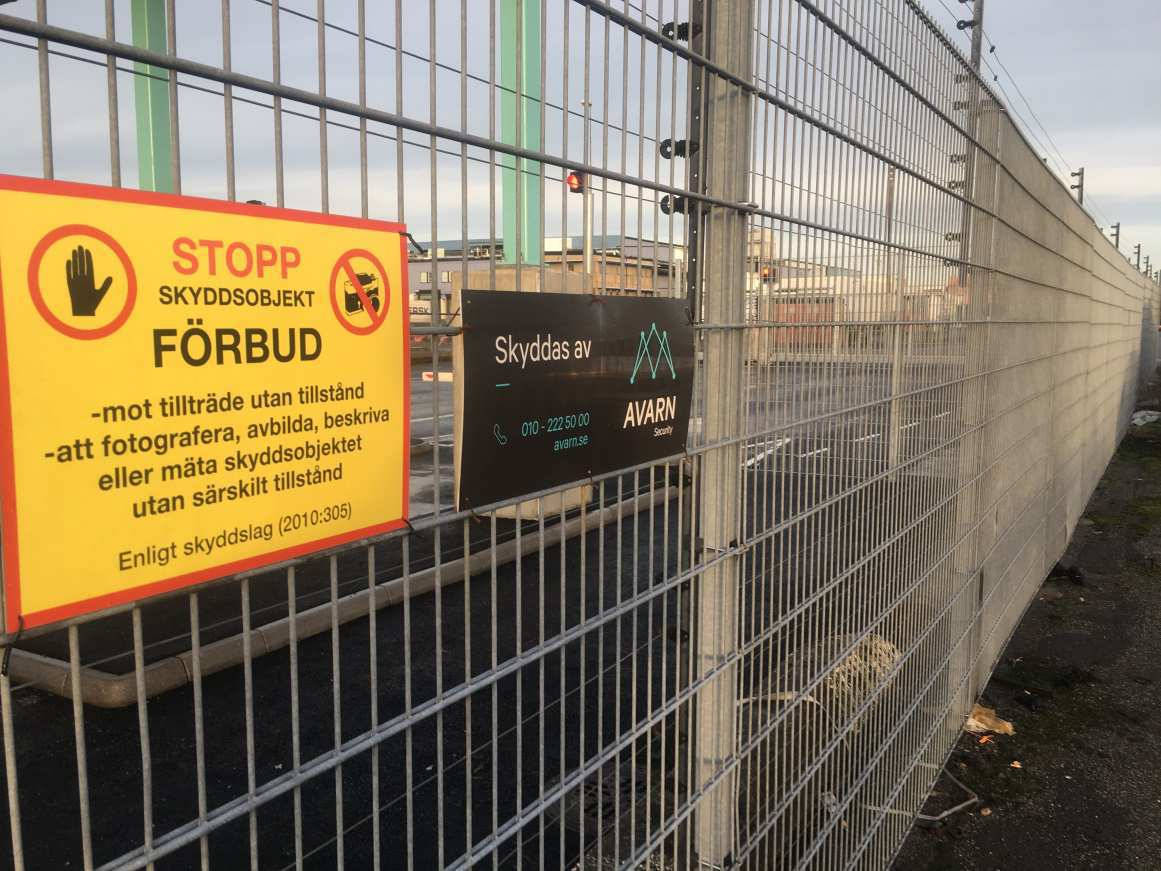 En hamn är ett skyddsobjekt — tillträdet är kontrollerat, och nu måste det också kunna bevisas.
En hamn stannar aldrig riktigt. Fartyg anländer, underentreprenörer rullar in genom grinden, gods förflyttas, skift byts av — tusentals gånger om året, år efter år. Och runt all den här rörelsen växer en mur av regler: ISPS-koden under SOLAS, nu NIS2, och från i våras en reviderad ISO 14001. Kraven fortsätter att stiga. Det som inte hängt med är hur de flesta hamnar bevisar att de lever upp till dem.
ISPS har i över två decennier krävt att hamnanläggningar styr tillträdet och håller sina skyddsplaner aktuella, med skyddsutredningar som ses över med jämna mellanrum. NIS2 — i Sverige numera lag genom cybersäkerhetslagen — lägger till skärpt riskhantering, snabb incidentrapportering och personligt ansvar på ledningsnivå. ISO 14001:2026 höjer ribban ytterligare för att visa faktisk, mätbar prestanda — inte bara dokumenterad avsikt.
Lägg märke till den röda tråden. Inget av regelverken nöjer sig med en policy som ligger i en pärm. De ställer samma svåra fråga: kan ni bevisa det? Vem som var godkänd innan de släpptes in. Vilka kompetenser som var giltiga just den dagen. Vilken instruktion som skickades, lästes och förstods. Vad som faktiskt hände vid grinden, på kajen, i rapporten.
Hos de flesta aktörer sätts det beviset fortfarande ihop för hand — kalkylblad, mejltrådar, en pärm som tas fram veckan före revisionen. Det fungerar, ända tills det inte gör det.
Från manuellt till självstyrande
Här är skiftet värt att hålla ögonen på: ett litet men växande antal aktörer ser inte längre regelefterlevnad som pappersarbete att jaga ifatt. De digitaliserar hela processen och låter den sköta sig själv.
Tanken är enkel. Ställ in reglerna en gång — vem som behöver vilken utbildning, vilket certifikat, vilket tillstånd, för vilken uppgift och vilket område — och låt systemet upprätthålla dem löpande. Onboarding, kompetenskontroller, instruktioner med läst-och-förstått-kvittens, tillträde till området, själva arbetet, avslutet när jobbet är klart. Varje steg blir en loggad, verifierbar händelse i stället för något någon måste komma ihåg att registrera.
Det här är det som är verkligt nytt: när det väl är konfigurerat blir det ett självstyrande ramverk. Tillträdet speglar verklig status, inte förra månadens ögonblicksbild. Certifikat som håller på att gå ut flaggar sig själva. Instruktioner når rätt arbetslag och bekräftar att de gått fram. Och allt oftare är det AI som håller vakt — lyfter glappet, missen, den uteblivna kvittensen innan det blir en avvikelse. Ramverket håller sig självt ärligt.
Här kommer Inphiz in
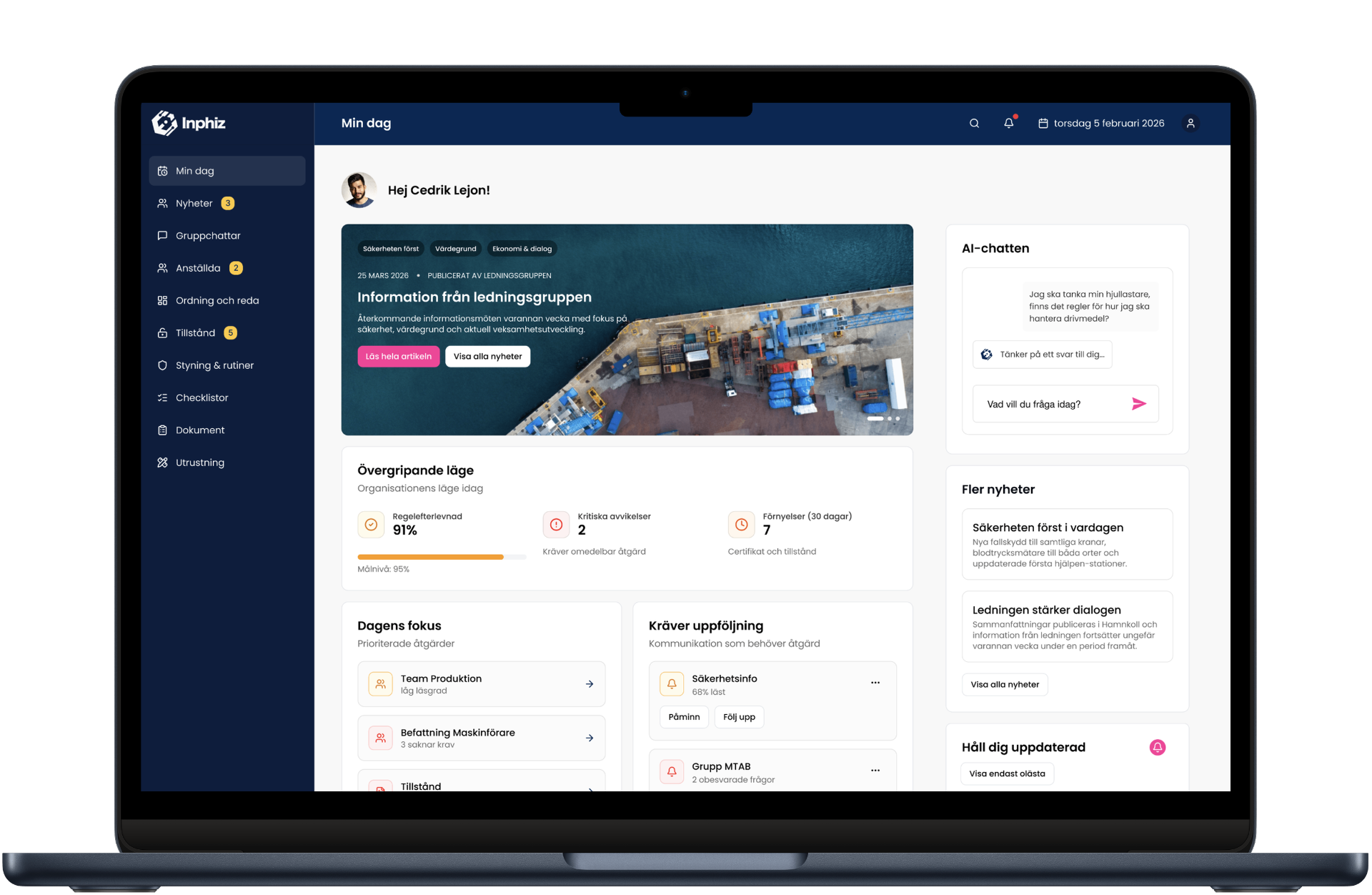 Regelefterlevnad som håller sig själv ärlig — den levande lägesbilden i Inphiz.
Det här är precis vad Inphiz är byggt för — hela kedjan från onboarding till avslut, för anställda såväl som underentreprenörer. Varje person är kvalificerad och behörig innan de börjar; varje tillstånd, instruktion och rapport fångas när det sker; och hela skyddsramverket förblir spårbart och revisionsklart som standard.
Vinsten är inte bara en smidigare revision. När beviskedjan är obruten kan du ge en kund ett betydligt starkare bevis på att ni sköter regelefterlevnaden effektivt — och samma disciplin höjer kvaliteten i själva verksamheten. Färre glapp, mindre omarbete, tydligare ansvar. Regelefterlevnad slutar vara priset för att verka i en reglerad bransch och blir i stället något ni kan peka på.
Det finns en större bild också. Att det förblivit så manuellt så länge att bevisa regelefterlevnaden för arbetsstyrkan säger kanske något om hur lite investeringar som nått fältet genom åren. Vänd på det — ge människorna ute samma kvalitet på verktyg som kontoret länge haft — och något nyttigt händer: samma system som bevisar regelefterlevnaden driver också produktivitet och effektivitet, och med dem högre kvalitet i slutändan.
Reglerna kommer att fortsätta skärpas, och de kommer att närma sig varandra över gränserna. De aktörer — och de länder — som ser det som ett gemensamt systemproblem, inte ett lokalt pappersproblem, är de som kommer att kunna bevisa det utan att tappa tempo. Vi bygger hellre det tillsammans än att var och en uppfinner det på nytt.
Källor: IMO:s ISPS-kod (SOLAS kapitel XI-2); EU:s NIS2-direktiv 2022/2555, genomfört i Sverige som cybersäkerhetslagen (2025:1506), i kraft 15 januari 2026; ISO 14001:2026, publicerad 15 april 2026.